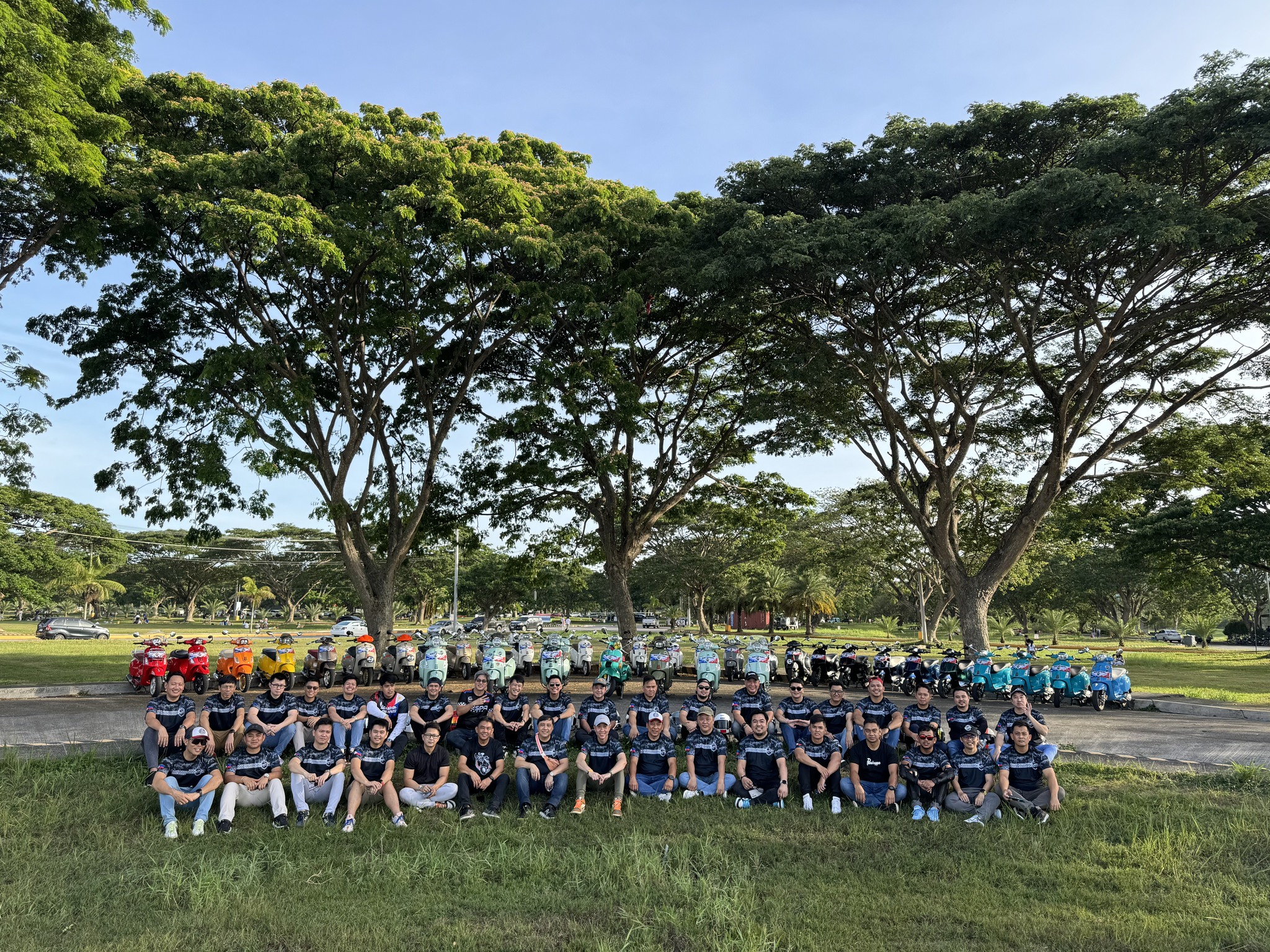
Davao City is a place that demands a lot from its riders. Its roads span the full spectrum — smooth expressways connecting the city's districts, bustling national highway corridors lined with tricycles and jeepneys, narrow barangay streets, and the occasional rough provincial road that rewards the adventurous. A Vespa, properly chosen and properly maintained, handles all of it with characteristic elegance and surprising capability.
Understanding Davao City's Road Character
With a land area of over 2,400 square kilometres, Davao City is one of the largest cities by area in Southeast Asia. This scale means that commuting is a genuine challenge — distances between districts like Buhangin, Matina, Toril, and Calinan are significant, and the road network connecting them varies considerably in quality and character. The R. Castillo and C.M. Recto corridors carry dense urban traffic; the Davao-Bukidnon highway opens into flowing suburban riding; and the coastal road toward Toril offers one of the most pleasant daily commutes available to any city rider in the Philippines.
This diversity rewards a versatile scooter — one that is comfortable in slow urban traffic, capable enough on the expressway, and stable enough on less-than-perfect road surfaces. The Vespa GTS 300 meets every one of these demands. The Primavera 150 handles the urban portions admirably. Both deliver something that few other scooters can: a daily ride that feels like a pleasure rather than a chore.
Steel Body vs. Plastic: Why It Matters on Philippine Roads
The most significant engineering differentiator between a Vespa and virtually every Japanese scooter in the same price bracket is the body construction. Every Vespa uses an all-steel monocoque shell — the same structural principle used in cars. This single fact has profound practical implications for riders in the Philippines.
Steel absorbs minor impacts without cracking. A low-speed contact with a bollard, a careless bump in a parking lot, or a light scrape on a pothole edge that would crack a plastic-bodied scooter's bodywork will leave only a small dent on a Vespa — repairable by any competent panel beater at modest cost. Steel also provides better torsional rigidity, which contributes directly to the Vespa's precise, connected handling feel. And steel ages gracefully: a well-maintained Vespa body does not fade, degrade, or become brittle the way plastic eventually does in the Philippines' UV-intense environment.
For riders in Davao — where parking is often informal, traffic is unpredictable, and road surfaces occasionally demand careful navigation — this robustness is not a minor feature. It is a genuine everyday advantage.
Handling Traffic: Maneuverability in the City
Davao City traffic, particularly during the morning and evening rush hours along the national highway and Quirino Avenue corridors, can be genuinely dense. A scooter that is agile, predictable, and easy to position in traffic makes that experience manageable. The Vespa's step-through frame — unchanged in its fundamental philosophy since D'Ascanio's original 1946 design — provides a low centre of gravity, an unobstructed foot area for bracing at stops, and a compact width that allows threading through gaps with confidence.
The Primavera 150 is particularly suited to this environment. Its 130kg kerb weight and quick-turning 11-inch wheels mean that repositioning in traffic is intuitive and effortless. The GTS 300, while heavier and slightly wider, compensates with enough power to extract itself from tricky situations decisively and enough stability to track straight at speed when a gap opens.
Both models benefit from the Vespa's single-sided front fork, which provides precise and progressive front-end feedback. Unlike many budget scooters where the front end feels vague and disconnected, a Vespa tells the rider exactly what is happening at the contact patch — a quality that builds confidence quickly in new riders and is deeply appreciated by experienced ones.
Performance on Davao's Expressways and National Highways
The GTS 300 deserves particular attention here. With 23 horsepower and a top speed well above 120 kph, it is genuinely capable on the Davao expressway and the national highway sections that connect the city's outer districts. Many riders are surprised to discover how comfortable a GTS is at sustained highway speed — the large front wheel, the stable chassis, and the comfortable riding position combine to make long runs feel relaxed rather than stressful.
Commuters who travel between Davao City and nearby municipalities — Digos, Tagum, or further — find the GTS 300 a far more suitable tool than smaller-displacement alternatives. The 300cc engine does not strain at 90–100 kph. It simply cruises, returning fuel consumption in the 28–32 km/L range that, given fuel prices, makes it economically competitive with much cheaper machines.
For purely urban riders who rarely venture onto the expressway, the Primavera 150 is entirely adequate. Its top speed of approximately 95 kph is more than sufficient for urban flow, and its lighter weight makes the daily ritual of navigating the city centre feel effortless.
Fuel Economy in a High-Cost Market
Fuel prices in the Philippines are among the highest in Southeast Asia relative to average income, and fuel economy is therefore a serious consideration for any daily rider. The Vespa Primavera 150 typically returns 40–50 km per litre in mixed urban conditions — outstanding for a premium scooter of its class. The GTS 300, with its larger engine and greater performance, returns approximately 28–35 km/L. Both figures compare favourably with competitors in their respective displacement classes.
The practical implication for a Davao City commuter covering 30–40 km per day is that both models require refuelling approximately once per week — a routine that costs relatively little and eliminates range anxiety entirely. The Primavera's superior fuel economy makes it particularly economical over a full year of daily commuting, often closing the initial purchase price gap with cheaper alternatives when total cost of ownership is calculated.
Wet Season Riding: Safety in the Rain
Davao City's rainy season brings heavy and sometimes sudden rainfall. Riding in these conditions demands careful attention to tyre condition, braking distances, and visibility. The Vespa's wide, low-profile tyres provide good water displacement, and the dual-channel ABS on the GTS 300 is a meaningful safety advantage on wet roads where sudden braking can cause rear-wheel lock-up on scooters without this system.
The Vespa's enclosed bodywork is also advantageous in rain — the steel floor panel, leg shield, and enclosed underbody protect the rider's legs and feet from road spray better than open-frame designs. Riders who commute year-round report that arriving at work significantly less wet than they would on a conventional motorcycle is a genuine daily quality-of-life improvement.
The Local Vespa Community: A Practical Advantage
Owning a Vespa in Davao City is not a solitary experience. Vespa Club Davao, founded in August 2018 and now comprising 80 members as of 2026, provides a genuine community resource for local riders. Whether you need advice on finding the best local technician for a specific repair, recommendations for compatible spare parts, or simply the company of fellow enthusiasts for a weekend ride, the club is there.
The practical knowledge accumulated within a Vespa club is one of its most underrated benefits. Experienced members have typically encountered and solved most common issues with their own machines, and their hard-won insights save newer members considerable time and expense. This collective expertise effectively extends the support network well beyond the official dealer service infrastructure.
Frequently Asked Questions
Is Davao City safe for Vespa riding?
Davao City has a well-earned reputation as one of the safest cities in the Philippines. Traffic enforcement is generally effective, and the culture of road discipline is stronger than in many other major Filipino cities. Vespa riders in Davao consistently report feeling comfortable and safe, particularly on established commuting routes. Standard safety precautions — proper helmet, visible gear, and defensive riding technique — apply as they do anywhere.
Is there a Vespa dealer in Davao City?
Yes, Davao City has an authorised Vespa dealer with a service centre offering genuine Piaggio parts, scheduled servicing, and warranty work. The Vespa Club Davao community can provide current contact details and recommendations for specialist technicians who work on both modern and classic Vespa models.
Can a Vespa handle Davao's flooded streets during heavy rain?
Like any scooter, a Vespa should not be ridden through deep standing water that risks ingestion of water into the air intake or exhaust. For typical urban flooding of ankle depth or less, the Vespa's relatively high ground clearance and enclosed underside handle it reasonably well. Avoid attempting to ford deeper flood waters regardless of your scooter type.
What Vespa model is most popular among Vespa Club Davao members?
VCD members ride a diverse mix of models, from vintage PX and Sprint variants to modern GTS 300s and Primavera 150s. The GTS 300 is popular among members who use their Vespas for both daily commuting and longer group rides; the Primavera is favoured by urban-focused riders who value agility and style. Both are well-represented within the club.
Conclusion
Davao City is a great city for Vespa riders. Its varied road network, its relatively ordered traffic environment, the community of fellow enthusiasts that awaits you in VCD, and the availability of dealer support and parts all combine to make a Vespa a genuinely sensible choice — not just a romantic one. The Italian engineering holds up to Philippine conditions admirably. The riding experience it delivers is simply unmatched in its class. And the friendships built within the Vespa Club Davao community make the journey even richer.